The Future of Medicine: Applied Artificial Intelligence for Health and Drug Development
Artificial intelligence is moving from the margins of medicine to its core. Here is how applied AI for health — agentic systems, generative and geometric deep learning — is reshaping drug development and clinical work, and where I believe the real, durable value lies.
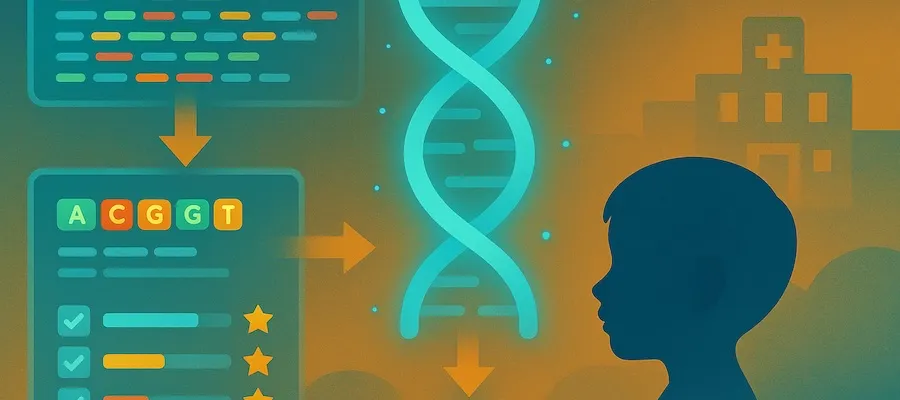
From hype to applied artificial intelligence for health
For a decade, "AI in medicine" mostly meant demonstrations: a model that matched radiologists on a benchmark, a chatbot that answered health questions, a proof of concept that never left the lab. That era is ending. The frontier now is applied artificial intelligence for health — systems that are actually wired into the workflows of scientists and clinicians and judged by whether they change an outcome, a timeline or a cost. The shift matters because medicine is unforgiving: a model that is accurate on average but wrong in the wrong way is worse than useless. The winners of the next decade will not be the flashiest models but the ones that are deployed responsibly, evaluated honestly, and built to earn trust.
Agentic AI: from answering questions to doing work
The first big change is the rise of agentic AI. A large language model on its own is a talented conversationalist; an agent is a system that can act — query a knowledge base, call a scientific tool, run a multi-step plan, and check its own work against trusted sources. In healthcare, that distinction is everything. Retrieval-augmented generation (RAG) keeps an agent grounded in a specific, verifiable corpus rather than in the model's fuzzy memory; orchestration frameworks such as LangChain and the emerging Model Context Protocol (MCP) let an agent connect safely to the tools and data a task actually requires.
The practical payoff is in the knowledge-heavy, repetitive scaffolding that surrounds real medical work: synthesising the evidence behind a decision, drafting and cross-checking documentation, triaging incoming information, and automating the connective tissue between systems that were never designed to talk to each other. Done well, agentic AI does not replace expert judgement — it removes the drudgery around it, so that expensive human attention is spent where it belongs. Done badly, it hallucinates confidently in a domain where confidence is dangerous, which is precisely why grounding, guardrails and human oversight are not optional extras but the core of the engineering.
Generative and geometric deep learning in drug development
The second, and perhaps more profound, change is in how we discover therapeutics. Drug development is famously a funnel: enormous numbers of possibilities at the top, years of expensive attrition before anything reaches a patient. Anything that improves the odds at the front of that funnel compounds all the way down. This is where generative and geometric deep learning are rewriting the rules.
Biological molecules are defined by their three-dimensional shape, not by the raw string of letters that encodes them. Geometric deep learning takes that seriously: by representing molecules as graphs and reasoning over spatial relationships, it respects the physical symmetries that determine how a molecule behaves. Combined with generative models that propose entirely new candidates rather than merely screening known ones, it lets researchers explore regions of chemical and sequence space that traditional trial-and-error would never reach.
My own research is a concrete instance of this shift. In my Master's thesis, Aptamer Predictive Triage, generative and geometric deep learning are used to design aptamers — short nucleic-acid molecules that bind a chosen target — and then triage the candidates so that only the most promising go to the wet lab. Earlier, my Bachelor's thesis on RNA secondary structure prediction used deep learning to improve how we predict the folding that governs RNA's function. Different problems, one principle: model the structure, learn from data, and shrink the slowest, costliest steps of discovery.
The unglamorous half: data and engineering
It is tempting to talk only about models, but the future of medicine will be decided as much by plumbing as by architectures. Medical data is heterogeneous, sensitive and messy; getting it clean, governed and flowing is often harder than training the model that consumes it. A model that runs beautifully in a notebook but cannot be deployed, monitored or maintained will never help a single patient. That is why scalable data pipelines, containerised and reproducible infrastructure, and — where latency matters — genuinely optimised code are not afterthoughts. The organisations that pull ahead will be the ones that treat research-grade modelling and production-grade engineering as a single discipline, so that a promising result survives the journey from prototype to something a clinician or scientist can rely on every day.
Beyond drug discovery: diagnostics, personalized medicine and longevity
Drug development is the headline, but the same toolkit reaches much further. In diagnostics, structure-aware models can design the specific molecular recognition elements — aptamers, for instance — that power fast, cheap point-of-care tests, and generative methods can help interpret complex signals that would overwhelm hand-built rules. In personalized medicine, machine learning on genomic and multi-omic data is beginning to turn the promise of "the right treatment for the right patient" into something operational, matching therapies to the biology of an individual rather than the average of a trial population. And in the longer arc of longevity and preventive health, AI's ability to find weak but real signals across huge, noisy datasets is exactly what is needed to understand ageing and intervene earlier. These are the areas — DNA and RNA analysis, gene editing, personalized medicine — that most excite me, because they move medicine upstream: from treating disease to preserving health.
What unites all of them is the same discipline that makes drug discovery work: represent the biology faithfully, learn from data without fooling yourself, and keep the human expert in command. The techniques generalise; the rigour has to travel with them.
Trust, evidence and the YMYL bar
Health is the ultimate "your money or your life" domain, and the standard of evidence has to match. The future of medical AI is not just more capable models but more accountable ones: evaluated on data that reflects real deployment conditions, transparent about their limits, grounded in verifiable sources, and kept firmly within a human-in-the-loop process. Regulation will tighten, and rightly so. Far from being a brake, that pressure is an opportunity — it rewards teams who build for validation and traceability from day one, and it filters out the demos that were never going to survive contact with a real clinic. Trustworthiness, in other words, is becoming a feature, not a compliance cost.
What I expect next
Looking ahead, I expect three trends to define the field. First, specialised beats general: domain-tuned models and agents that deeply understand a narrow slice of medicine will outperform generic ones where it counts. Second, structure-aware AI goes mainstream in the life sciences, as geometric and generative methods move from research papers into standard drug-discovery pipelines. Third, the human-plus-agent team becomes the default unit of work — not AI replacing experts, but experts amplified by agents that handle the scale and the scaffolding. The through-line across all three is applied artificial intelligence for health that is measured by outcomes and built to be trusted.
That is the future I am building toward: using agentic AI, generative deep learning and structure-aware modelling to make medicine faster, cheaper and more precise — responsibly. If you are working on AI in drug development, diagnostics or clinical workflows, I would be glad to compare notes.
Frequently asked questions
What is applied artificial intelligence for health?
It is AI that is embedded in real medical and scientific workflows and judged by outcomes — a changed timeline, cost or result — rather than benchmark scores. The emphasis is on responsible deployment, honest evaluation and earning clinical trust.
How is AI used in drug development?
Generative and geometric deep learning propose and prioritise molecular candidates at the front of the discovery funnel — for example generating and triaging aptamers or predicting RNA folding — so fewer, better-targeted experiments are needed.
Will AI replace doctors and scientists?
No. The most valuable pattern is the human-plus-agent team: agents handle scale and scaffolding while experts keep judgement and accountability. In a high-stakes, YMYL domain, human oversight is a design requirement, not a limitation.
Read more
Building the future of medicine with AI?
I'm an AI Engineer focused on agentic AI, generative deep learning and custom ML for healthcare, medicine and drug development.
Get in touch