Aptamer Predictive Triage (APT): Generative & Geometric Deep Learning for Drug Discovery
A Master's thesis in Artificial Intelligence and Data Engineering (University of Pisa) that applies generative AI and geometric deep learning to the de-novo design of aptamers — accelerating the earliest, most expensive stage of drug and diagnostic development.
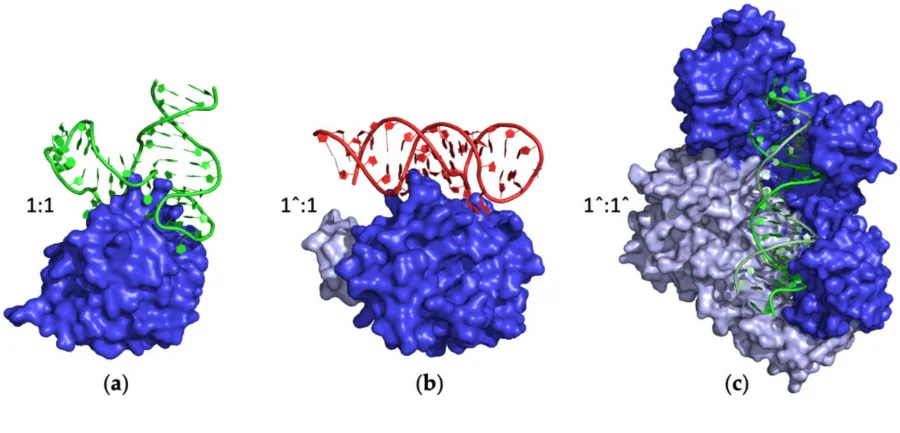
The problem: finding molecular binders is slow and expensive
Aptamers are short, single-stranded DNA or RNA oligonucleotides that fold into precise three-dimensional shapes and bind a chosen target — a protein, a small molecule, or a whole cell — with antibody-like specificity. Because they are chemically synthesised rather than grown in living systems, they are cheaper, more stable and easier to modify than antibodies, which makes them attractive building blocks for diagnostics, biosensors and targeted therapeutics.
The difficulty lies in discovery. The classical laboratory route, SELEX (Systematic Evolution of Ligands by EXponential enrichment), iterates through many rounds of binding, washing and amplification to enrich a random library toward high-affinity sequences. It works, but it is slow, costly and biased by the experimental protocol, and it explores only a vanishingly small corner of a sequence space that grows as 4N with sequence length. For a research team trying to hit a novel target, each additional SELEX campaign is weeks of wet-lab effort with an uncertain outcome.
The idea: predict and triage candidates before the wet lab
Aptamer Predictive Triage reframes discovery as a machine-learning problem. Instead of searching the sequence space blindly in the lab, the system learns the relationship between an aptamer's structure and its ability to bind a given target, then uses that learned model to generate promising candidates de-novo and triage them — ranking a large pool of proposals so that only the most credible sequences are carried forward to costly experimental validation.
Two complementary capabilities sit at the core of the work:
- De-novo generation. A generative model proposes new candidate aptamers conditioned on a target, rather than mutating an existing pool. This lets the search reach regions of sequence space that iterative enrichment would never sample.
- Predictive triage. A scoring model estimates binding plausibility for each candidate, turning an unmanageable set of possibilities into a short, prioritised list — the "triage" that gives the project its name.
Why geometric deep learning
An aptamer's behaviour is dictated by its folded shape, not by its raw sequence of letters. Treating a molecule as flat text throws away exactly the information that determines binding. Geometric deep learning offers a better inductive bias: by representing molecular structure as graphs and reasoning over spatial relationships, the models respect the symmetries of the underlying chemistry — the same principles that power modern structure-aware architectures for proteins and nucleic acids.
In this project, geometric and generative deep learning are combined so that the generator produces structurally coherent candidates and the triage model evaluates them in a representation that reflects three-dimensional folding rather than surface-level token statistics. This structure-first perspective is what distinguishes the approach from sequence-only baselines.
How generation and triage work together
The two components are designed as a loop rather than a one-shot pipeline. The generator proposes a broad, diverse pool of candidate sequences for a given target; the triage model scores and ranks them; and the highest-ranked candidates are the ones a lab would synthesise and test. Crucially, this framing is compatible with the experimental reality of aptamer discovery — the model does not claim to replace validation, it prioritises it. Every real binding result that comes back can, in principle, sharpen the scoring model, so the system improves as it is used. The goal is not a single perfect prediction but a dramatically better hit rate per experiment, which is where the cost of discovery actually lives.
The technical stack
The pipeline is built in Python with PyTorch, using geometric deep-learning tooling to encode molecular graphs, generative modelling for de-novo proposal, and standard scientific-Python infrastructure (NumPy, pandas, scikit-learn) for data preparation, evaluation and analysis. The workflow is organised as a reproducible research pipeline — data curation, model training, candidate generation and triage scoring — so that results can be regenerated and extended rather than produced one-off.
Beyond therapeutics: diagnostics and biosensing
Because aptamers are cheap, stable and easy to functionalise, their usefulness extends well past drug candidates. The same de-novo design and triage machinery applies to aptamer-based biosensors ("aptasensors") for rapid diagnostics, to affinity reagents that can stand in for antibodies in laboratory assays, and to targeted delivery vehicles. Anywhere a highly specific, synthesisable molecular recognition element is needed, a computational method that proposes and ranks strong binders for a novel target shortens the path from idea to working assay — which is why predictive triage is best understood as a general capability for molecular design, not a single-use tool.
Why it matters for healthcare and medicine
Anything that shrinks the search at the front of the drug-development funnel compounds downstream. By filtering candidates computationally before committing wet-lab resources, predictive triage aims to reduce the number of physical SELEX rounds needed to reach a viable binder, lower cost, and open the door to targets that are difficult to address experimentally. The same machinery generalises beyond therapeutics to diagnostics and biosensing, wherever a highly specific, synthesisable molecular recognition element is required.
Aptamer Predictive Triage sits within a broader research focus on applied AI for healthcare and medicine — using generative and geometric deep learning to make biological discovery faster, cheaper and more targeted.
The methodology in depth
Concretely, the work breaks into four stages that mirror how a modern applied-AI project for drug development is built. First, representation: candidate sequences and their folded conformations are encoded as molecular graphs, so that nodes carry nucleotide identity and edges capture both backbone connectivity and spatial proximity. This is where geometric deep learning earns its place — the representation is invariant to the arbitrary choices (rotation, translation, atom ordering) that would confuse a naive sequence model.
Second, generation: a generative model learns the distribution of plausible binders and samples new sequences conditioned on the target, expanding the search into regions of the 4N sequence space that iterative laboratory enrichment would never reach. Third, scoring: a predictive model estimates binding plausibility for every proposal, producing the ranked shortlist that defines the "triage." Fourth, evaluation: the shortlist is judged with retrieval-style metrics — how many true binders appear near the top of the ranking — because in a triage setting what matters is precision at the top, not average accuracy across the whole pool. Held-out targets are used to check that the model generalises rather than memorising known aptamer–target pairs.
This staged design also makes the system practical to extend: each component — encoder, generator, scorer — can be improved independently, and every real binding result returned from the lab is new supervision that sharpens the scorer for the next campaign. It is applied artificial intelligence for drug development built as an iterative loop, not a one-shot prediction.
Honest scope and limitations
It is worth being precise about what a system like this does and does not claim. A learned scorer is only as trustworthy as the data behind it, and experimentally characterised aptamer–target pairs are far scarcer than, say, labelled images — so the model's confidence must be read as a prioritisation signal, not a guarantee of binding. Generative models can also propose sequences that look plausible yet are hard to synthesise or prone to off-target interactions, which is exactly why the wet lab stays in the loop as the final arbiter. And because performance depends on how similar a new target is to those seen in training, the honest expectation is a strong improvement in hit rate on related targets and a more modest, carefully validated lift on genuinely novel ones. Stating these limits plainly is part of doing applied AI for drug development responsibly: the goal is a better-informed experiment, not a replacement for evidence.
Frequently asked questions
What is aptamer predictive triage?
It is a machine-learning approach that generates candidate aptamers de-novo for a chosen target protein or molecule and then ranks them by predicted binding plausibility, so that only the strongest candidates reach costly experimental validation.
How does geometric deep learning help aptamer design?
Because binding depends on 3D folded shape, geometric deep learning — reasoning over molecular graphs and spatial relationships — produces candidates and scores that are structurally meaningful, rather than relying on the raw order of letters in a sequence.
Does AI replace SELEX?
No. It prioritises experimental effort. By shortlisting the most credible binders, predictive triage reduces the number of wet-lab rounds and improves the hit rate per experiment, cutting the time and cost of discovery.
Which technologies are used?
Python and PyTorch, with geometric deep-learning tooling for molecular graphs, generative modelling for de-novo proposal, and NumPy, pandas and scikit-learn for data preparation and evaluation.
Related work
Working on AI for drug discovery or diagnostics?
I build agentic AI and custom machine-learning solutions for healthcare, medicine and drug development.
Get in touch