AI for Healthcare & Medicine
I'm Francesco Boldrini, an Artificial Intelligence Engineer who designs agentic AI systems and custom machine-learning solutions for health, healthcare and drug development. This page maps how I apply generative and geometric deep learning to the hardest problems in the life sciences.
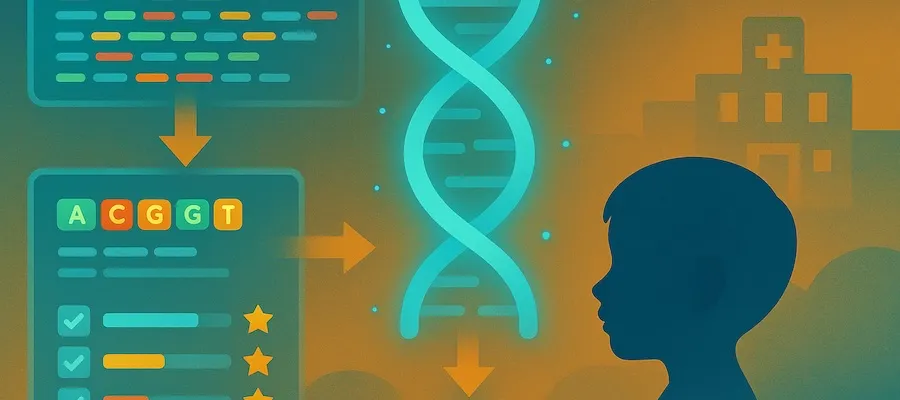
Applied AI for health, built to reach the clinic
Healthcare and medicine are among the most demanding domains for artificial intelligence. The data is heterogeneous and messy, the cost of being wrong is high, and a model only matters if it changes what a scientist or clinician can actually do. My work sits at that intersection: not AI for its own sake, but applied machine learning designed to compress timelines, cut cost and open up questions that were previously out of reach — in drug development, diagnostics and the broader life sciences.
At UniKey I work as an Artificial Intelligence Engineer designing agentic AI systems and bespoke machine-learning pipelines for health, healthcare and drug development. That builds directly on a Master's degree in Artificial Intelligence and Data Engineering from the University of Pisa, with research centred on generative and geometric deep learning for medical and genetic applications.
Agentic AI for scientific and clinical workflows
Large language models become genuinely useful in medicine when they can act, not just talk. I build agentic AI systems that orchestrate LLMs, retrieval-augmented generation (RAG) and custom embeddings into autonomous, tool-using workflows — agents that can query knowledge bases, call scientific tools, reason over multi-step tasks and stay grounded in trustworthy sources.
The engineering backbone here is orchestration with LangChain and the Model Context Protocol (MCP), which lets an agent connect safely to domain-specific tools and data. Applied to healthcare, this means triage and decision-support pipelines, literature and evidence synthesis, and assistants that automate the repetitive scaffolding of research so that human experts spend their time on judgement rather than plumbing.
Generative & geometric deep learning for drug discovery
The most distinctive part of my work is structure-aware deep learning for molecular design. Biological molecules are defined by their three-dimensional shape, so I use geometric deep learning — models that reason over graphs and spatial relationships — together with generative AI that proposes new candidates de-novo rather than merely screening existing ones.
My Master's thesis, Aptamer Predictive Triage, applies exactly this combination to the de-novo generation of aptamers that bind a chosen target protein or molecule, and then triages the candidates so that only the most promising reach the wet lab. It is a concrete example of using AI to shrink the slowest, most expensive stage of the drug-development funnel.
Deep learning for genetics and computational biology
Structure-aware modelling extends naturally to nucleic acids. My Bachelor's thesis on RNA Secondary Structure Prediction used deep learning to improve prediction of how RNA folds — a foundational capability for RNA-based therapeutics and diagnostics. Across both projects the through-line is the same: represent biology by its structure, learn from data, and complement established scientific methods rather than discarding them. My broader interests reach into DNA/RNA analysis, gene editing, personalised medicine, longevity and bio-hacking.
The engineering that makes it real
Research only creates value when it runs reliably in production. My background in high-performance and backend engineering means these models don't stop at a notebook. I've built real-time, low-latency critical software in C/C++ and CUDA, backend microservices in Java and Spring Boot, and scalable data pipelines with Apache Spark, ElasticSearch and Kubernetes. For the AI itself I work in Python with PyTorch and modern deep-learning tooling. The result is machine learning that can be deployed, monitored and trusted — on cloud or self-hosted infrastructure.
Rigour and trust in a high-stakes domain
Healthcare is a domain where being confidently wrong is worse than being uncertain. That shapes how I build. Models are evaluated on held-out data that reflects real deployment conditions rather than optimistic benchmarks; generative systems are treated as tools that prioritise expert effort, not replace expert judgement; and agentic pipelines are kept grounded in verifiable sources so their outputs can be traced and checked. Keeping a human in the loop, being explicit about a model's limits, and validating against ground truth are not afterthoughts — in medicine they are the difference between a demo and a system anyone should rely on.
How I can help
If you are a pharmaceutical, biotech, medtech or research team looking to apply AI to drug development, diagnostics or clinical workflows, I bring both the research depth in generative and geometric deep learning and the engineering discipline to ship it. Whether the need is an agentic AI assistant, a generative model for molecular design, or a custom ML pipeline for biological data, I can help take it from idea to working system.
Where applied AI for health creates the most value
Not every problem in medicine is an AI problem, and part of the job is knowing the difference. The places where machine learning pays off most are the ones with a painful bottleneck and a usable signal in the data: the front of the drug-discovery funnel, where computational triage can spare months of wet-lab work; diagnostics and biosensing, where structure-aware models design specific recognition elements; and the knowledge-heavy corners of clinical and scientific workflows, where agentic AI can synthesise evidence and automate scaffolding while a human retains the decision. Framing engagements around a concrete bottleneck — rather than "add AI" — is what turns applied artificial intelligence for health into measurable outcomes.
A pragmatic technology stack for medical AI
The tooling follows the problem. For agentic systems: LLM orchestration, retrieval-augmented generation and custom vector embeddings wired together with LangChain and the Model Context Protocol. For structure-aware modelling and drug discovery: generative and geometric deep learning in PyTorch, operating on molecular graphs. For the data and delivery layer that makes any of it real: Apache Spark and ElasticSearch pipelines, containerised microservices on Docker and Kubernetes, and — where latency is critical — optimised C/C++ and CUDA. The point of naming the stack is not the acronyms but the span: research-grade modelling and production-grade engineering under one roof, so a promising model does not die on the way to deployment.
In practice I work with teams across the spectrum — pharmaceutical and biotech groups exploring AI for drug discovery, medtech and diagnostics companies, and research labs that need a machine-learning collaborator who understands the biology as well as the code. What they have in common is a real problem and real data; my role is to translate that into a model and a system that holds up outside the demo.
Crossing the research-to-production gap
Most medical-AI ideas fail not because the model is wrong but because it never survives contact with reality — the data pipeline is brittle, inference is too slow, or nobody can trust or maintain the result. The way I work is deliberately built to cross that gap. A typical engagement starts by pinning down the bottleneck and a measurable definition of success, then moves through a fast prototype that proves signal exists in the data, an honest evaluation on realistic held-out cases, and only then the engineering to make it robust: reproducible pipelines, monitoring, and deployment on cloud or self-hosted infrastructure. Because I have shipped both research models and production backend and high-performance systems, I can carry a project across that whole arc instead of handing it off at the riskiest moment. In a domain where "your money or your life" applies literally, that continuity — from generative and geometric deep learning through to a monitored, maintainable service — is often the difference between a demo and something a team can actually rely on.
Frequently asked questions
What does applied AI for healthcare and medicine mean?
Using machine learning to change what scientists and clinicians can do — compressing timelines, cutting cost and opening new questions in drug development, diagnostics and the life sciences — rather than AI for its own sake.
How is agentic AI used in healthcare?
It turns LLMs into autonomous, tool-using workflows (via LangChain and MCP) for triage and decision support, evidence synthesis and research assistants that stay grounded in trustworthy sources.
What is geometric deep learning used for in drug discovery?
Reasoning over molecular shape to design and evaluate candidates — generating and triaging aptamers, or predicting RNA folding — to accelerate the earliest, most expensive stages of drug development.
How do you keep medical AI trustworthy?
Held-out evaluation under realistic conditions, generative models that prioritise rather than replace expert judgement, source-grounded agents, and a human in the loop — the essentials for high-stakes YMYL applications.
Featured healthcare & medicine projects
Let's apply AI to your healthcare challenge
Agentic AI, generative deep learning and custom ML for medicine, drug development and the life sciences.
Get in touch